Embracing the Unknown: The Role of Faith and Trust in Surrender

Across spiritual traditions, literature, and teachings from sages, the recurring theme of faith and trust in the unknown stands as a beacon of universal wisdom. At the heart of this theme lies the belief that surrendering to forces beyond our control allows us to access an infinite well of resilience, purpose, and, ultimately, peace. In our quest for security and control, we are reminded that life itself is a dance with uncertainty, a continuous unfolding that asks us to step forward in faith, trusting that every twist and turn serves a higher purpose.

The Power of Surrender

Surrender does not imply defeat; instead, it suggests a courageous acceptance of reality as it is, without resistance. To surrender is not to abandon action, but to release the need to control outcomes. It is an acknowledgment that we are participants in a much larger, intricate tapestry of life that unfolds according to rhythms and patterns beyond our comprehension. By loosening our grip on certainty, we find space to engage life’s possibilities with open minds and receptive hearts.

In the Bhagavad Gita, Lord Krishna encourages Arjuna to perform his duty without attachment to the results, symbolizing a surrender to divine will. This lesson speaks to the wisdom of trusting the process over fixating on the outcome. Faith in the divine plan, often obscured from our view, brings an inner peace that arises from knowing we do not need to have all the answers or control every step of the journey. Life, then, becomes an act of trusting in something greater than ourselves, a fundamental aspect of surrendering to the unknown.

Faith as a Bridge Over Fear

Faith serves as the bridge between our human need for control and the recognition of life’s unpredictability. This faith—whether placed in a deity, the universe, or a natural order—anchors us in something stable amidst the chaos of life. Sacred texts universally echo this sentiment. In the Bible, Proverbs 3:5-6 reminds us, “Trust in the Lord with all your heart and lean not on your own understanding; in all your ways submit to him, and he will make your paths straight.” Here, we are invited to place trust in a wisdom beyond our limited perception, knowing it will guide us through the unknown.

Faith, in this sense, is an act of humility. It is the ability to step back and recognize our limitations while simultaneously believing in a guiding force. When we trust that our lives are unfolding as they should, faith transcends fear, replacing it with a quiet assurance that we are supported, even if we do not fully understand how.

The Embrace of Uncertainty

To trust in the unknown is to embrace uncertainty as a fundamental aspect of life. In the Tao Te Ching, Lao Tzu beautifully states, “When I let go of what I am, I become what I might be. When I let go of what I have, I receive what I need.” This teaching encourages us to open ourselves to possibilities beyond the borders of our expectations. When we resist the unknown, we inadvertently restrict our growth, yet by accepting uncertainty, we make room for transformation and growth.

For many, uncertainty is synonymous with fear, but seen through the lens of spiritual wisdom, it becomes a profound teacher. Life’s unpredictability forces us to face our assumptions and expand our resilience, pushing us beyond our comfort zones. As we let go of preconceived ideas, we encounter life in a purer form—less conditioned by past experience and more open to potential.

The Divine Purpose in Life’s Challenges

Many sacred texts illuminate the purpose within life’s challenges, reinforcing that struggles are not random but often carry meaning and potential for inner transformation. For example, in the Qur’an, we find: “And whoever puts their trust in Allah, He will be sufficient for them” (65:3). This passage reminds us that when we surrender our worries, placing trust in a higher power, we are provided for in ways that surpass our understanding.

Similarly, in Buddhism, challenges are seen as pathways to enlightenment. The Dhammapada encourages letting go of past, present, and future attachments, suggesting that by surrendering to life’s natural course, we reach a state of liberation. Each hardship, then, becomes an opportunity to align with a greater purpose and deepen our understanding of ourselves.

Resilience Through Trust

When we trust that the unknown is not to be feared but embraced, we cultivate resilience. Rather than seeing the unknown as a void, we view it as a space rich with potential. Trusting in this process builds an inner strength that remains unwavering, even as external circumstances fluctuate. Carl Jung’s words, “I am not what happened to me, I am what I choose to become,” reflect this idea. When we choose faith, we exercise our freedom to transform our experiences into sources of strength, perspective, and wisdom.

Resilience born from trust allows us to transcend our circumstances and connect with a purpose that gives meaning to our experiences. We begin to understand that setbacks and difficulties are temporary, tools of growth rather than obstacles to our joy.

Surrender as a Path to Peace

In a world that often prioritizes control, surrendering to the unknown may feel counterintuitive. However, this surrender leads to a profound peace. The Upanishads suggest that by understanding the unity of all things, we transcend the illusion of separateness and connect with the infinite. This perspective nurtures a sense of wholeness that cannot be shaken by external events, fostering a state of peace beyond circumstances.

The willingness to surrender does not mean a lack of action but a shift in perspective. We act with intention and purpose but release attachment to the outcome, trusting that our lives are unfolding as they are meant to. This surrender, coupled with faith, transforms every moment into an opportunity for peace and alignment with a higher will.

Living in Harmony with the Unknown

The universal call to surrender and trust in the unknown is an invitation to live in harmony with life’s rhythms, to accept each moment as it comes, and to find peace in the flow of existence. Faith and trust transcend the individual and connect us to a collective wisdom that spans across sacred texts, traditions, and time. They encourage us to approach the unknown not with fear, but with a curiosity and courage that honors life’s divine order.

In surrendering to the forces beyond our control, we are not losing ourselves but finding a truer version of ourselves—one that is resilient, peaceful, and whole. Through faith and trust, we become active participants in the grand mystery of life, trusting in the unseen threads that guide us, and discovering that, in the end, we are exactly where we are meant to be.

Unlocking the Path to Expanded Consciousness: A Journey Within

Expanded consciousness is not just an abstract idea but a tangible experience that can transform how we see the world and live our lives. Throughout history, sages, philosophers, and mystics have spoken about the ability to see beyond the ordinary and tap into a deeper reality—one where we recognize our true essence and the interconnectedness of all things.

In this article, we will explore the wisdom of sacred teachings on expanded consciousness and practical ways to reach it in daily life. As we begin, let these quotes inspire your journey:

“If the doors of perception were cleansed, everything would appear to man as it is: infinite.”
William Blake, “The Marriage of Heaven and Hell”

“You are not a drop in the ocean. You are the entire ocean in a drop.”
Rumi

(This image symbolizes the interconnected nature of existence, where each drop reflects the infinite ocean of consciousness.)

The Call to Expanded Consciousness

Expanded consciousness is often described as seeing with new eyes—moving beyond the limitations of ego, time, and space to perceive the deeper truths that bind us together. As the famous writer Marcel Proust once said:

“The real voyage of discovery consists not in seeking new landscapes, but in having new eyes.”
Marcel Proust

This new way of seeing is a shift in awareness, where we are no longer confined to our limited perception of self and reality. It’s the realization that our true nature is far more expansive, interconnected, and infinite than we ever imagined.

The Wisdom of Sacred Teachings

Many sacred texts offer insights into the nature of expanded consciousness. These teachings remind us that accessing this higher awareness is not an unattainable goal, but a spiritual journey that can be undertaken by anyone willing to commit to the path.

  1. The Upanishads: Unity of Self and the Universe

In the Upanishads, the ancient Hindu scriptures, expanded consciousness is about realizing the unity of the individual soul (Ātman) with the universal consciousness (Brahman). The separation between self and others is an illusion, and true awareness comes when we perceive this oneness.

“The man who sees all beings in the Self, and the Self in all beings, hates none.”
Isha Upanishad

  1. The Bible: Transformation Through the Mind

In Christianity, expanded consciousness is closely linked to spiritual renewal and transformation. The Bible encourages believers to move beyond worldly thinking and align with divine wisdom.

“Do not conform to the pattern of this world, but be transformed by the renewing of your mind.”
Romans 12:2

  1. The Tao Te Ching: Beyond Words and Concepts

The Tao Te Ching, the cornerstone of Taoist philosophy, teaches that expanded consciousness is about transcending the limits of language and understanding the Tao (the Way). This journey requires letting go of rigid concepts and flowing with the natural order of the universe.

“The Tao that can be told is not the eternal Tao; the name that can be named is not the eternal name.”
Tao Te Ching, Verse 1

  1. The Qur’an: Striving for Divine Guidance

In Islam, expanded consciousness is about striving to align one’s will with divine guidance. By committing to this journey, believers can experience greater insight and wisdom.

“And those who strive for Us—We will surely guide them to Our ways.”
Qur’an 29:69


Ways to Access Expanded Consciousness

Accessing expanded consciousness is not an instant process—it requires dedication, mindfulness, and intentional practice. However, it is achievable for anyone willing to take the steps. Here are some powerful ways to begin expanding your awareness:

  1. Meditation and Mindfulness
  • Meditation is one of the most effective practices to quiet the mind and tap into deeper levels of awareness. In meditation, we learn to observe thoughts and feelings without attachment, leading to a state of inner stillness where expanded consciousness can emerge.
  • Mindfulness in everyday life encourages us to stay present, notice the interconnectedness of everything, and cultivate a deeper awareness of each moment.
  1. Self-Reflection and Inner Work
  • Self-reflection involves examining our thoughts, beliefs, and emotional patterns. Through inner work, such as journaling or shadow work, we peel away the layers of ego and conditioning, gaining clarity on our true self.
  • This process allows us to access a more expansive perspective, where we see beyond the limited boundaries of the personal self.
  1. Connection with Nature
  • Nature is a powerful teacher of expanded consciousness. By immersing ourselves in natural surroundings, we begin to sense the harmony, balance, and interconnectedness of all life.
  • Spending time in nature can help cleanse the “doors of perception” and remind us of the infinite cycles and beauty that exist beyond human concerns.

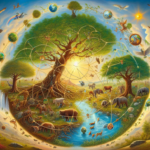
(This image serves as a reminder of the vastness of the universe, reflecting how consciousness can expand beyond the self.)

  1. Breathwork and Energy Practices
  • Breathwork, such as pranayama or deep diaphragmatic breathing, helps to activate the body’s energetic systems and facilitate a shift in consciousness. These practices can enhance mental clarity, reduce stress, and create space for deeper awareness to arise.
  • Energy practices like Reiki or Qi Gong also focus on balancing the body’s energetic flow, opening pathways to expanded awareness.
  1. Learning from Mystics and Sacred Texts
  • Reading sacred texts and learning from the teachings of mystics like Rumi, Lao Tzu, and others can help deepen our understanding of consciousness.
  • Engaging with spiritual literature can awaken inner realizations and inspire our own journey toward expanded consciousness.


Final Reflection: Transcending the Ordinary

As Deepak Chopra says:

“Consciousness is the basis of being. It is through expanded awareness that we transcend the limits of ordinary experience.”
Deepak Chopra

Each step toward expanded consciousness takes us closer to living a life of greater peace, purpose, and connection. It invites us to go beyond the surface and tap into the boundless nature of who we truly are.

Expanded consciousness is not just a state reserved for mystics or sages but a potential within every human being. As we explore meditation, mindfulness, nature, and ancient wisdom, we open the doors of perception and begin to experience the infinite.

In the words of William Blake:

“If the doors of perception were cleansed, everything would appear to man as it is: infinite.”
William Blake, “The Marriage of Heaven and Hell”

So, embark on this journey, cleanse the doors of your perception, and realize that you are not just a drop in the ocean—you are the entire ocean in a drop.


Why Gratitude?

Gratitude is more than just a fleeting feeling; it is a deep awareness of the abundance in our lives, a practice that can uplift our spirits and transform our well-being. The simple act of acknowledging what we are grateful for has profound effects on our physical, emotional, and spiritual health. The power of gratitude goes beyond improving our mood—it enhances our connection with the world around us and with ourselves.

Thornton Wilder beautifully captures the essence of this in his words: *”We can only be said to be alive in those moments when our hearts are conscious of our treasures.”* Gratitude brings us into the present, illuminating the treasures we might otherwise overlook. It is a gateway to a more joyful and fulfilled life, shifting our focus from what we lack to what we have in abundance.

The Holistic Benefits of Gratitude

  1. Emotional Well-being:

When we cultivate gratitude, we naturally begin to shift away from negative emotions like resentment, envy, and frustration. In fact, practicing gratitude has been linked to higher levels of happiness, reduced stress, and increased resilience. As the Stoic philosopher Epictetus reminds us: *”He is a wise man who does not grieve for the things which he has not, but rejoices for those which he has.”* Gratitude encourages us to celebrate the present and recognize the richness of our current circumstances.

  1. Strengthened Relationships:

Gratitude strengthens our relationships with others. When we take the time to appreciate the people in our lives, we nurture deeper connections and encourage positivity. Marcel Proust wisely noted: “Let us be grateful to people who make us happy; they are the charming gardeners who make our souls blossom.” By expressing gratitude, we acknowledge the role others play in our happiness, creating a ripple effect of kindness and mutual support.

  1. Physical Health:

Scientific research shows that people who regularly practice gratitude enjoy better health. They experience fewer aches and pains, lower blood pressure, and even sleep better. Gratitude leads to a more optimistic outlook, which in turn promotes healthier behaviors like regular exercise, better diet, and mindfulness.

  1. Mental Clarity and Focus:

Gratitude sharpens our perspective and helps us focus on what truly matters. In a world constantly pulling our attention in various directions, gratitude centers us. It allows us to focus on the abundance we possess rather than the distractions of what we may lack. This clarity fosters a sense of peace and purpose.

  1. Spiritual Growth:

Many spiritual traditions recognize gratitude as a vital practice in connecting with the divine and aligning with the flow of life. By living in gratitude, we tune in to the deeper meaning of existence and our place within the universe. Gratitude becomes a form of worship, a recognition of life’s sacredness in each moment. Gratitude is universal as seen in various sacred texts highlighted here.

  • The Bible (Christianity):

– “Give thanks in all circumstances; for this is God’s will for you in Christ Jesus.” — 1 Thessalonians 5:18

– “Oh give thanks to the Lord, for he is good; for his steadfast love endures forever!” — 1 Chronicles 16:34

  • The Quran (Islam):

– “And [remember] when your Lord proclaimed, ‘If you are grateful, I will surely increase you [in favor]; but if you deny, indeed, My punishment is severe.'” — Surah Ibrahim 14:7

– “So remember Me; I will remember you. And be grateful to Me and do not deny Me.” — Surah Al-Baqarah 2:152

  • The Bhagavad Gita (Hinduism):

– “Whatever you do, whatever you eat, whatever you offer in sacrifice, whatever you give, whatever austerity you practice, do that as an offering to Me.” — Bhagavad Gita 9:27

– “He who is content with whatever gain comes to him, who has overcome duality, and is free from envy, who is steady in both success and failure, is never bound, even though he acts.” — Bhagavad Gita 4:22

  • The Torah (Judaism):

– “Give thanks to the Lord, for He is good; His love endures forever.” — Psalm 107:1

– “Enter His gates with thanksgiving and His courts with praise; give thanks to Him and praise His name.” — Psalm 100:4

  • The Dhammapada (Buddhism):

– “Let us rise up and be thankful, for if we didn’t learn a lot today, at least we learned a little, and if we didn’t learn a little, at least we didn’t get sick, and if we got sick, at least we didn’t die; so, let us all be thankful.” — Dhammapada

  • Tao Te Ching (Taoism):

– “Be content with what you have; rejoice in the way things are. When you realize there is nothing lacking, the whole world belongs to you.” — Lao Tzu, Tao Te Ching 44

These quotes highlight the universality of gratitude across various spiritual traditions.


A Daily Practice of Gratitude

Gratitude does not always come naturally, especially in difficult times. However, it is precisely in those moments when gratitude is most needed. By making it a daily practice, we train our minds to seek the positive, even amidst challenges. Start small—perhaps by writing down three things you are grateful for each day. Over time, you’ll notice that this simple practice can transform your entire outlook.


Remember, “We can only be said to be alive in those moments when our hearts are conscious of our treasures.” Gratitude is not just about saying “thank you” for the good in our lives—it is about living in a way that constantly recognizes and celebrates the beauty that surrounds us. It is a mindset that uplifts, heals, and inspires.


Embrace gratitude today, and watch as it fills your life with greater joy, connection, and peace.

Navigating the Depths of an Existential Crisis

“I believe it is one of the greatest crises, a moment of the deepest self-reflection of humanity. Whether man recovers from it, whether he becomes master of this crisis, is a question of his strength.”  ~  Friedrich Nietzsche

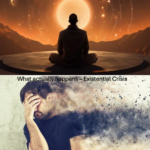
An existential crisis can be one of the most disorienting and profound periods of our lives. It is a moment when we are confronted with deep questions about the nature of existence, purpose, and the meaning of life itself. Such crises can be sparked by significant life changes, losses, or simply the introspective realization of our mortality and the vast, often uncertain universe we inhabit. While these moments can be overwhelming, they also offer an opportunity for growth, self-discovery, and a deeper understanding of the human condition.

The Nature of an Existential Crisis

Jean-Paul Sartre once said, “Everything has been figured out, except how to live.” This statement captures the essence of an existential crisis: the realization that despite all the knowledge, achievements, and societal structures, we are often left with fundamental uncertainties about our existence. This experience can lead to feelings of anxiety, dread, and disconnection, as we question everything from our daily routines to our deepest beliefs.

Existentialist philosopher Søren Kierkegaard referred to this state as “the dizziness of freedom.” According to him, humans are thrust into a world where we must choose our paths, yet we are overwhelmed by the sheer number of possibilities and the responsibility that comes with each choice. It is this freedom, both a blessing and a curse, that can trigger a crisis of meaning.

Finding Meaning Amidst Suffering

While an existential crisis can feel like a descent into darkness, it can also pave the way for profound personal growth. Viktor E. Frankl, a psychiatrist and Holocaust survivor, emphasized the importance of finding a purpose, even amidst suffering. He famously said, “He who has a why to live can bear almost any how.” Frankl’s experience taught him that even in the most difficult circumstances, the pursuit of meaning can provide the strength to endure.

This perspective is echoed in Friedrich Nietzsche’s assertion: “To live is to suffer, to survive is to find some meaning in the suffering.” The acknowledgment of suffering as an inevitable part of existence invites us to explore ways to transcend it. Instead of avoiding or denying these experiences, embracing them allows us to find a purpose that aligns with our values and aspirations.

The Burden and Freedom of Choice

One of the core aspects of existential crises is the realization of our freedom to shape our lives. Sartre famously remarked that “Man is condemned to be free,” highlighting the paradox of human existence: while we crave freedom, we are also terrified by the burden it places upon us. The responsibility for defining our path, values, and beliefs rests squarely on our shoulders, and this realization can lead to profound anxiety.

In a similar vein, Franz Kafka said, “I am free, and that is why I am lost.” His words underscore the challenge of navigating life’s infinite possibilities. Yet, it is through this very freedom that we can carve out a unique existence, building a life that resonates with our truest selves.

Embracing the Journey Within

While existential crises often feel isolating, they are also a natural part of the human journey. The poet Rainer Maria Rilke advised, “Be patient toward all that is unsolved in your heart and try to love the questions themselves.” His suggestion is to accept the uncertainty and the unknown as integral aspects of life, rather than something to be feared or resolved hastily. In doing so, we can cultivate a sense of inner peace and openness to the evolving nature of our existence.

Carl Jung echoed this sentiment with his belief in the transformative power of self-acceptance. He stated, “The most terrifying thing is to accept oneself completely.” This process of self-acceptance is not about solving every problem or finding definitive answers. Rather, it is about embracing our complexity, our freedom, and our potential for growth.

The Path Forward: Creating Meaning

Existential crises challenge us to look beyond external structures and expectations, urging us to explore what truly matters to us on a personal level. Albert Camus, a philosopher of absurdism, offered a powerful reminder: “In the midst of winter, I found there was, within me, an invincible summer.” This quote encapsulates the resilience that can arise from within when we face life’s uncertainties head-on.

In navigating an existential crisis, it can be helpful to seek meaning in the everyday, focusing on small moments of joy, acts of kindness, and connections with others. Simone de Beauvoir encouraged action without delay, saying, “Change your life today. Don’t gamble on the future, act now, without delay.” In other words, the search for meaning is not about finding grand answers but about engaging actively with the world in ways that align with our deepest values.

Conclusion

An existential crisis, though often marked by discomfort and confusion, is a profound invitation to explore the depths of our inner world and the nature of existence itself. Through the words of philosophers and writers, we find that such crises are not signs of failure or weakness but rather an essential part of the human experience. They challenge us to confront our fears, embrace our freedom, and seek out the meaning that resonates with our authentic selves.

As we journey through the crisis, we may come to realize, as Rilke and others have suggested, that it is not the definitive answers that provide peace but the courage to live with the questions and uncertainties. In this process, we begin to carve out a path of meaning, purpose, and inner strength that sustains us through life’s challenges.

The Journey of Spiritual Awakening: A Path Beyond Thought

Spiritual awakening is not just a mystical concept reserved for ancient sages and monks; it’s an experience that can profoundly transform any individual, regardless of their background or belief system. At its core, spiritual awakening is a shift in consciousness—a realization that life is more than what meets the eye and that true essence lies beyond the surface of everyday thoughts and desires.

As Eckhart Tolle profoundly wrote in “The Power of Now”:

“The beginning of freedom is the realization that you are not the possessing entity — the thinker. Knowing this enables you to observe the entity. The moment you start watching the thinker, a higher level of consciousness becomes activated. You then begin to realize that there is a vast realm of intelligence beyond thought, that thought is only a tiny aspect of that intelligence. You also realize that all the things that truly matter — beauty, love, creativity, joy, inner peace — arise from beyond the mind. You begin to awaken.”

— Eckhart Tolle, The Power of Now: A Guide to Spiritual Enlightenment

This statement encapsulates a truth that resonates across many spiritual traditions: awakening is the realization that we are not merely our thoughts. It is the understanding that our inner world, often driven by ceaseless thinking, is only a part of who we are. By observing our thoughts rather than being consumed by them, we unlock a deeper level of awareness—a vast field of consciousness that exists beyond the limitations of the mind.

Aldous Huxley posited, “The spiritual journey does not consist in arriving at a new destination where a person gains what they did not have or become what they are not. It consists in the dissipation of one’s own ignorance concerning oneself and life, and the gradual growth of that understanding, which begins a spiritual awakening.”

What Is Spiritual Awakening?

Spiritual awakening is often described as a moment of profound insight, where a person’s perception of reality undergoes a significant shift. This shift may occur spontaneously or through spiritual practices like meditation, yoga, or deep contemplation. Awakening allows one to see life with fresh eyes, no longer confined to the narrow view of the ego but instead connected to a broader, universal perspective.

While the term “awakening” might sound lofty, its core elements are present in everyday experiences:

– Detachment from the Ego: The awakened person recognizes that their identity is not tied to fleeting thoughts, emotions, or external roles. Instead, they realize their connection to something greater—often referred to as the true self or higher consciousness.

– Present-Moment Awareness: Awakening invites a person to live fully in the present. No longer burdened by regrets of the past or anxieties about the future, they find peace in the *now*, which Tolle emphasizes as the gateway to true freedom.

– Inner Peace and Joy: Rather than seeking fulfillment from external sources, the awakened individual taps into an inherent sense of joy and peace that arises from within. This inner calm is not dependent on circumstances but is a natural expression of being in alignment with higher consciousness.

Sacred Insights on Awakening

Throughout history, different cultures and spiritual traditions have described the experience of awakening in various ways. Here are some sacred insights from texts that illuminate this journey:

– Bhagavad Gita (Hinduism):

  “When a man dwells on the objects of sense, attachment to them is born; from attachment arises desire, from desire anger is born.” — Bhagavad Gita 2:62

  This passage reflects the Hindu perspective that spiritual awakening begins with transcending attachments to material desires. By overcoming the constant pull of the senses, one becomes free to experience the true nature of the soul.

– The Bible (Christianity):

  “Awake, O sleeper, and arise from the dead, and Christ will shine on you.” —Ephesians 5:14

  The Bible calls for a spiritual awakening from the slumber of ignorance. To awaken is to rise from spiritual death and live in the light of Christ, allowing divine consciousness to illuminate one’s path.

– Dhammapada (Buddhism):

  “The awakened one, whose conquest of self is complete, who is free from desire, who is without doubt, has attained the highest awakening.” —Dhammapada 354

  In Buddhist thought, awakening (or *nirvana*) is the ultimate freedom from suffering and desire. It is the realization that the self is an illusion, and liberation lies in the dissolution of the ego.

– The Quran (Islam):

  “Indeed, within the heavens and earth are signs for a people who use reason.” — Quran 30:21

  The Quran emphasizes reflection on the signs of God in the universe. Spiritual awakening is seen as a journey through which one uses reason and contemplation to recognize the presence and majesty of the Divine.

– Tao Te Ching (Taoism):

  “He who knows others is wise; he who knows himself is enlightened.” — Tao Te Ching, Chapter 33

  Awakening, according to Taoism, is deeply rooted in self-awareness. To know oneself is to align with the Tao, the fundamental principle of harmony in the universe.

– The Zohar, (Kabbalah):
“The awakening of the soul begins when the desire for spiritual fulfillment transcends the material and the finite, seeking connection with the Infinite Light of the Creator.”

This reflects the Kabbalistic belief that spiritual awakening occurs when one shifts from seeking material satisfaction to longing for a deeper, spiritual connection with the divine, often referred to as the Infinite Light.

How to Cultivate Spiritual Awakening

Although spiritual awakening can happen unexpectedly, certain practices can prepare the mind and heart for this profound shift. Here are some ways to nurture your awakening process:

– Mindfulness and Meditation: One of the most effective ways to experience awakening is through mindfulness or meditation. These practices help you become aware of your thoughts without attaching to them, creating the space for insight and clarity.

– Self-Inquiry: Ask yourself fundamental questions like, “Who am I beyond my thoughts and roles?” or “What is my purpose in this moment?” These questions can break down the layers of ego and connect you to your deeper self.

– Gratitude and Compassion: Awakening often blossoms in the soil of gratitude and compassion. By cultivating these qualities, you align yourself with higher frequencies of consciousness.

– Letting Go of Control: Often, awakening requires surrendering the need to control every outcome. By trusting in the flow of life and releasing the attachment to specific outcomes, you create space for a higher awareness to emerge.

Conclusion: Awakening is a Journey, Not a Destination

Spiritual awakening is not a final state of enlightenment that one reaches and never leaves. Rather, it is a continuous unfolding—a journey of discovery where each moment offers new insights and deeper clarity. As we become more present and connected to the essence of life, we gradually awaken to the truth of who we really are: beings of infinite love, consciousness, and peace.

So, whether you are just beginning your spiritual journey or have been on the path for some time, remember that awakening is available to you in every moment. It is not something outside of yourself, but rather the realization that your true nature has always been present, waiting for you to recognize it.

 The Profound Interconnectedness of All Beings: A Spiritual and Scientific Exploration

“In a real sense all life is inter-related. All men are caught in an inescapable network of mutuality, tied in a single garment of destiny. Whatever affects one directly, affects all indirectly. I can never be what I ought to be until you are what you ought to be, and you can never be what you ought to be until I am what I ought to be… This is the inter-related structure of reality.”

 Martin Luther King Jr.

“It’s a good thing to be in sync with each other on Earth,…now more and more studies are emerging that show how and why [it’s] so important for our own health, our connectivity to others, how we get along with others, and so on. This is really new science; we’re beginning to understand the importance of and the depth of synchronization that we have. I can’t tell you how many times I have said, “Well, on some level we’re all connected,” and science is now starting to show how we are fundamentally synchronized with the Earth.” Rollin McCraty, PhD, Heart Math Institute

In the heart of many spiritual traditions lies the profound teaching of interconnectedness, which underscores the oneness or unity that binds all living beings and the universe itself. This belief suggests that we are not isolated entities but rather parts of a vast, interwoven web of existence. In recent years, quantum science has begun to offer intriguing support for these ancient spiritual insights, particularly through the concept of quantum entanglement, which demonstrates that everything in the universe is connected in a profound and often mysterious way.

Recognizing this interconnectedness fosters a greater sense of empathy, compassion, and responsibility for the well-being of all living beings. When we understand that our actions ripple outward, affecting others and the world around us, we naturally develop a deeper sense of harmony and unity. This awareness helps us appreciate the intricate balance that sustains life and encourages us to live in ways that nurture rather than harm the delicate threads that connect us all.

Interconnectedness in Science and Spirituality

The idea of interconnectedness is not just a spiritual concept but also one that is supported by various scientific theories and discoveries. This convergence between spirituality and science adds depth to our understanding of the universe and our place within it.

Quantum Physics

Quantum physics has revealed that the universe operates in ways that challenge our conventional understanding of separateness. Some interpretations of quantum mechanics suggest that all things and beings are interconnected, with our minds potentially linked to a greater cosmic mind. As scientific exploration advances, the relationship between quantum physics and spirituality may offer new insights into the fundamental nature of reality and our role within it.

Interconnectedness Theorem

In 1964, physicist John Stewart Bell proposed the interconnectedness theorem, which asserts that any model of reality must be non-local. This means that particles, regardless of the distance between them, are connected by influences that transcend traditional spatial limitations. Bell’s theorem suggests that everything in the universe is linked, no matter how far apart things may seem. This discovery has profound implications for how we understand the relationships between seemingly separate entities.

Mind-Body Connection

A study published in *Nature* provides compelling evidence of the deep connection between the mind and body. The research reveals that brain regions responsible for movement are also linked to networks involved in thinking and planning, as well as to systems that control involuntary bodily functions like blood pressure and heartbeat. This study highlights how intricately our thoughts, actions, and physical health are interwoven, reinforcing the idea that our mental and physical states are not separate but deeply interconnected.

Other Dimensions of Interconnectedness

Beyond these foundational concepts, there are additional aspects of interconnectedness that further illustrate the intricate web that ties all things together:

Electromagnetic Fields

The discovery of electromagnetic fields and the experimental validation of quantum physics have led to the development of the “field view” of reality. According to this perspective, physical objects, including humans, do not exist in isolation but are instead part of a holistic, interconnected web of energy and influence. This view challenges the traditional notion of separateness and supports the idea that everything is part of a unified whole.

Neuroscience and Human Connection

Research in neuroscience has shown that human brains tend to synchronize during spontaneous social interactions. When people engage with one another, their brainwaves begin to oscillate at the same frequency, creating a sense of being “on the same wavelength.” This phenomenon underscores the deep, often subconscious connections that exist between individuals, further supporting the idea of interconnectedness in our daily lives.

Conclusion

The concept of interconnectedness bridges the gap between ancient spiritual wisdom and modern scientific discovery. Both realms point to the same truth: that we are all part of a vast, interconnected whole. By embracing this understanding, we can cultivate a greater sense of empathy, compassion, and responsibility, leading to a more harmonious existence for ourselves, others, and the planet. Whether through the lens of spirituality or science, the message is clear—everything and everyone is profoundly connected, and it is through recognizing and honoring these connections that we find true unity and peace.

“If You Die Before You Die Then You Won’t Die When You Die.”

Epigram from the gateway of Mt. Athos Monastery in Greece

“A seed breaks open and dissolves into the ground. Only then does a new fig tree come into being. That is the meaning of die before you die.” Rumi, Sufi Mystic and Poet

Dying Before You Die: A Reflection on Life, Death, and Liberation**

The concept of “dying before you die” reflects a profound aspect of the healing journey, highlighting the challenging yet beautiful dance between life and death. This idea, often found in Eastern philosophies and sacred practices, underscores the interconnectedness of life and death as a single, unified concept.

In Taoism, for instance, the notion of “life after death” is expressed through the idea of cosmic energy. This energy is seen as the driving, binding force that connects all things, guiding individuals through life and beyond. Similarly, Buddhist teachings emphasize the importance of understanding death as an integral part of life. Within these teachings, it is suggested that one should begin the journey of grappling with death long before it actually arrives, thereby allowing for a deeper acceptance and understanding of its place in the cycle of existence.

In contrast, Western society often resists the natural process of death. With a strong inclination toward control, people in the West frequently find themselves caught in a cycle of exhaustion and mental strain, endlessly striving to hold on to what is ultimately impermanent. The idea of surrendering to death—whether it be the death of dreams, relationships, behaviors, values, or perceptions—runs counter to this tendency. Yet, it is precisely this surrender that offers a path to true liberation.

When one allows themselves to embrace this concept, to metaphorically die before they die, they open the door to higher states of freedom. By releasing attachment to the physical form and letting go of the identity they have clung to so tightly, individuals can free themselves from the suffering driven by ego. This act of surrender enables the experience of total, undeniable liberation, even while still living in this reality.

The journey toward this state of freedom is not easy. It involves a continual process of letting go—mourning the passing of old behaviors, beliefs, and stories about who we are and what is true. This process requires courage, as it means allowing parts of oneself to die over and over again. Yet, it is through this repeated surrender that one can truly begin to live.

This reflection on “dying before you die” is a testament to the transformative power of surrender. It is a reminder that in letting go of what no longer serves us, we can find a deeper, more liberated way of being.

“The secret of life is to “die before you die” — and find that there is no death.”

― Eckhart Tolle, The Power of Now: A Guide to Spiritual Enlightenment

Sacred Texts:

The concept of “dying to self” is a recurring theme in various sacred texts and spiritual traditions, symbolizing the process of letting go of the ego, personal desires, and attachments in order to attain spiritual growth or union with the divine. Below are some references from different sacred texts that touch on this theme:

  1. Christianity (New Testament)

   – Galatians 2:20:

     _”I have been crucified with Christ and I no longer live, but Christ lives in me. The life I now live in the body, I live by faith in the Son of God, who loved me and gave himself for me.”_

   – Luke 9:23-24:

     _”Then he said to them all: ‘Whoever wants to be my disciple must deny themselves and take up their cross daily and follow me. For whoever wants to save their life will lose it, but whoever loses their life for me will save it.'”_

   – John 12:24-25:

     _”Very truly I tell you, unless a kernel of wheat falls to the ground and dies, it remains only a single seed. But if it dies, it produces many seeds. Anyone who loves their life will lose it, while anyone who hates their life in this world will keep it for eternal life.”_

  1. Buddhism (Dhammapada)

   – Dhammapada 279:

     _”All conditioned things are impermanent—when one sees this with wisdom, one turns away from suffering. This is the path to purification.”_

   – Dhammapada 21:

     _”Heedfulness is the path to the deathless; heedlessness is the path to death. The heedful do not die; the heedless are like the dead.”_

   The concept of “dying to self” in Buddhism is often associated with overcoming the illusion of the self (anatta) and attaining Nirvana, where the ego is transcended.

  1. Hinduism (Bhagavad Gita)

   – Bhagavad Gita 2:19-20:

     “Neither he who thinks the living entity the slayer nor he who thinks it slain is in knowledge, for the self slays not nor is slain. For the soul there is neither birth nor death at any time. It has not come into being, does not come into being, and will not come into being. It is unborn, eternal, ever-existing, and primeval. It is not slain when the body is slain.”_

   Here, the idea of dying to the false self (the body and ego) is key to realizing the eternal, unchanging nature of the true self (Atman).

  1. Islam (Qur’an)

   – Qur’an 2:153-157:

     _”O you who have believed, seek help through patience and prayer. Indeed, Allah is with the patient. And do not say about those who are killed in the way of Allah, ‘They are dead.’ Rather, they are alive, but you perceive it not. And We will surely test you with something of fear and hunger and a loss of wealth and lives and fruits, but give good tidings to the patient, who, when disaster strikes them, say, ‘Indeed we belong to Allah, and indeed to Him we will return.'”_

   The emphasis is on submission to the will of Allah, which involves a form of dying to one’s own ego and desires.

  1. Taoism (Tao Te Ching)

   – Tao Te Ching, Chapter 22:

     _”If you want to become full, let yourself be empty. If you want to be reborn, let yourself die. If you want to be given everything, give everything up.”_

   The Taoist view sees the process of “dying to self” as aligning oneself with the Tao, the ultimate reality, by relinquishing control and surrendering the ego.

These texts highlight the transformative power of “dying to self,” where surrendering the ego and personal will is seen as a necessary step toward spiritual awakening, enlightenment, or union with the divine.

Contemplative Practices

What is Contemplation?

Only a contemplative mind can usher in the new consciousness essential for awakening a more loving, just, and sustainable world.

Deepening Our Awareness

Contemplation involves being fully present—in heart, mind, and body—in a manner that allows us to respond creatively and work towards what could be. For many, this takes the form of prayer or meditation, a daily practice of deep listening to better connect with ourselves and divine love. Contemplative prayer helps us sustain the truths we encounter during profound experiences of love and suffering, long after the intensity of these moments fades.

Contemplative prayer is a lifelong practice, never perfected but always sufficient. Each time we pray, our habitual patterns of thinking and feeling inevitably interrupt and distract us from deep listening. Yet, it is through these repeated failings that we encounter Divine grace and experience a transformed mind.

Romans 12:2 urges us to renew our minds.

The Buddha teaches that “Change is never painful, only resistance to change is painful.”

Three Universal Truths:
1. Everything is impermanent and changing.
2. Impermanence leads to suffering, making life imperfect.
3. The self is not personal and unchanging but quite the opposite.

The contemplative mind is about being present in the moment without judgment, analysis, or critique. This holistic, heart-centered knowing opens the mind, heart, soul, and senses to the moment just as it is. Through this, we learn to love things in themselves and as themselves, holding both the attractive and the unpleasant together in one accepting gaze.

In short, contemplation is about entering a deeper silence and letting go of our habitual thoughts, sensations, and feelings to connect to a truth greater than ourselves.

Practice-Based Spirituality

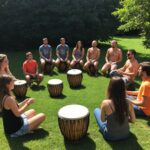
Many practice contemplation through Centering Prayer or focused breathing. Other cultural expressions include communal experiences (like speaking in tongues), movement (dancing or yoga), and music (drumming, ecstatic singing, or chanting). Different practices resonate with different people.

At Nechama Spiritual Center, we honor the diverse history and evolving future of contemplation by referring to many contemplative traditions.

Whatever practice(s) you choose, we invite you to commit to it. Through contemplation and life, The Divine works on us slowly and in secret. Contemplative practice gradually rewires our brains to perceive and respond to reality with love.

Examples of Contemplative Practices:

  • Drumming: Practicing surrendering the mind and attuning the body through rhythm.
  • Walking Meditation: Taking slow, mindful steps.
  • Ecstatic Dance: Moving freely to music.
  • Chanting: Singing with intention.
  • Centering Prayer: Observing and letting go of all thoughts without judgment during a period of silence.
  • Lectio Divina: Reading short passages of text in a contemplative way.
  • Welcoming Prayer: Welcoming any feeling, sensation, or emotion that arises during your day.
  • YHWH Prayer: Consciously saying the Divine’s name with each breath (the name you are familiar with).
  • Pranayama: Breathing mindfully.
  • Loving Kindness Meditation: Recognizing your inner source of loving kindness and sending love to others.
  • Yoga: Connecting the body, breath, and mind.
  • Sound Bath Meditation: Using sound to connect heart and mind for deeper meditation.

By engaging in these practices, we invite the Divine to transform us, helping us respond to life with greater love and understanding.

Community

What is community? 

A community, in its broadest sense, is a group of individuals bound together by a shared aspect, which could be anything from location to beliefs, interests, goals, or values. For instance, a geographical community pertains to those living within the same area or region, such as a neighborhood or city. In today’s digital age, online communities have flourished, bringing together individuals on websites, forums, and social media based on shared interests or goals. There are also cultural or ethnic communities, which comprise individuals of similar cultural, ethnic, or racial backgrounds, often connected by shared traditions, languages, and values.  Interest-based communities, on the other hand, revolve around shared  passions, from gaming to literature. Intentional communities are unique in that they involve individuals consciously choosing to come together based on a common purpose or shared values. Expanding the perspective to the natural world, the term community can also describe ecosystems, which are assemblages of different species interacting in a specific locale. Regardless of its form, the essence of a community is a sense of belonging, where members typically feel a mutual connection and shared identity.

Community for Nechama Spiritual Center

Community for us is our shared values. We share the following principles that bring us together with like-minded others.

    1. The inherent worth and dignity, the sacred spark of the soul of every person;
    2. Justice, equity and compassion in human relations;
    3. Acceptance of one another and encouragement to spiritual growth in our community;
    4. A free and responsible search for truth and meaning;
    5. The right of conscience and the use of the egalitarian process within our community and in society at large;
    6. The goal of world community with peace, liberty, and justice for all;
    7. Respect for the interdependent web of all existence of which we are a part.
    (Adapted from the Unitarian Universalist’s website)